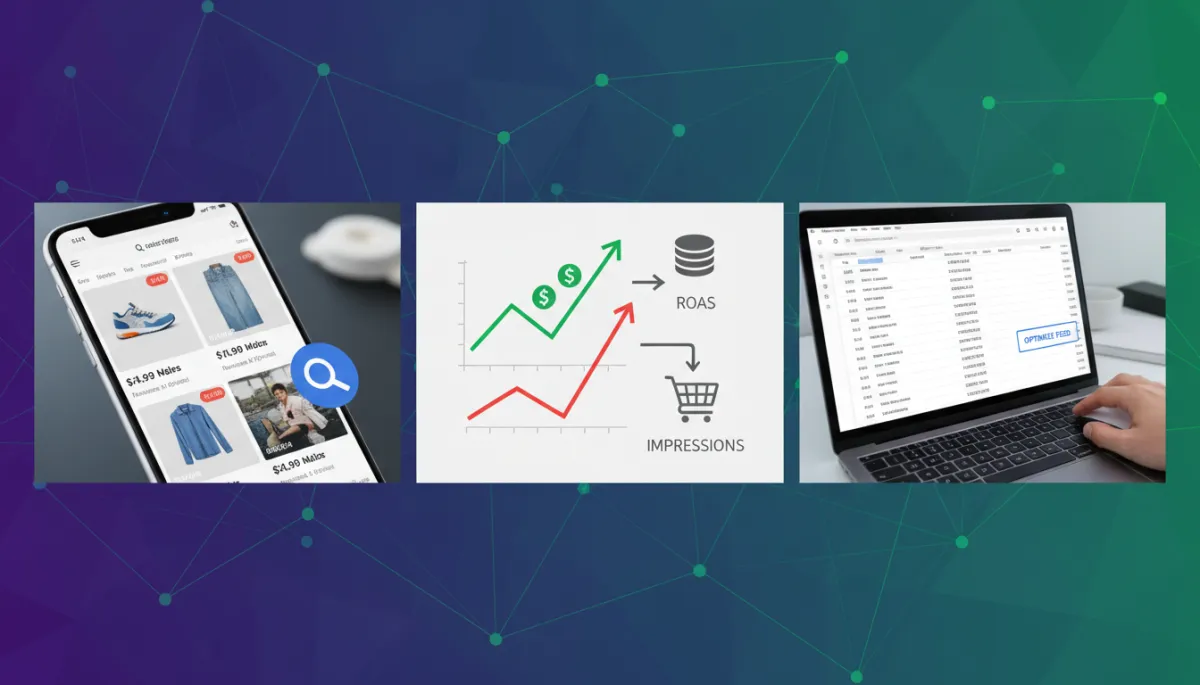
Maximize ROAS with KJDM's Google Shopping Ads
eCommerce PPC, Google Shopping Ads, ROAS Management
Dominate Google Shopping Ads With KJDM: Aggressive ROAS, Not Wasted Clicks
If you run an eCommerce store and you’re not squeezing every dollar out of Google Shopping Ads, you’re handing sales to your competitors. KJDM’s Shopping Ads management — from $297/mo to $558/mo — is built to fix that, fast.

How Google Shopping Ads Really Work (And Why They Outsell Text Ads)
Google Shopping Ads are brutally simple and brutally effective when they’re set up correctly. Instead of a line of text and a blue link, your ad shows a product image, price, title, and your business name directly in the search results — often before a user even scrolls. On desktop, they sit at the top of the page in a visual carousel. On mobile, they dominate the first screen. No fluff. Just products, prices, and brands competing side by side for the click and the sale.
Behind the scenes, Shopping Ads pull data from your product feed in Google Merchant Center: titles, descriptions, images, prices, availability, shipping, and more. Google matches that feed data to what people are searching for and decides which products to show and how much you’ll pay per click based on your bids, your feed quality, and your historical performance. In 2026, with AI-driven formats and stricter Merchant Center rules, that feed has become the backbone of your Shopping performance — and a weak feed kills visibility and ROAS, period (blog.google; mygoogle.fr).
Why Shopping Ads Convert Higher Than Text Ads for eCommerce
If you’re still leaning on generic search text ads to drive product sales, you’re paying for a lot of “just-looking” traffic. Text ads force buyers to guess what they’ll see after they click. Shopping Ads don’t. They show the exact product, the exact price, and your brand before the click ever happens. That single difference changes everything for conversion rates and wasted spend.
When a shopper sees your product image and price in the results, they self-qualify. If the product isn’t what they want or the price is out of budget, they don’t click. That means you never pay for that window shopper. The people who do click already know what they’re getting into — they liked the product, accepted the price, and recognized your brand. That’s why well-run Shopping campaigns routinely out-convert text ads for eCommerce and deliver stronger ROAS at scale. You’re filtering out bad clicks before they cost you a cent.
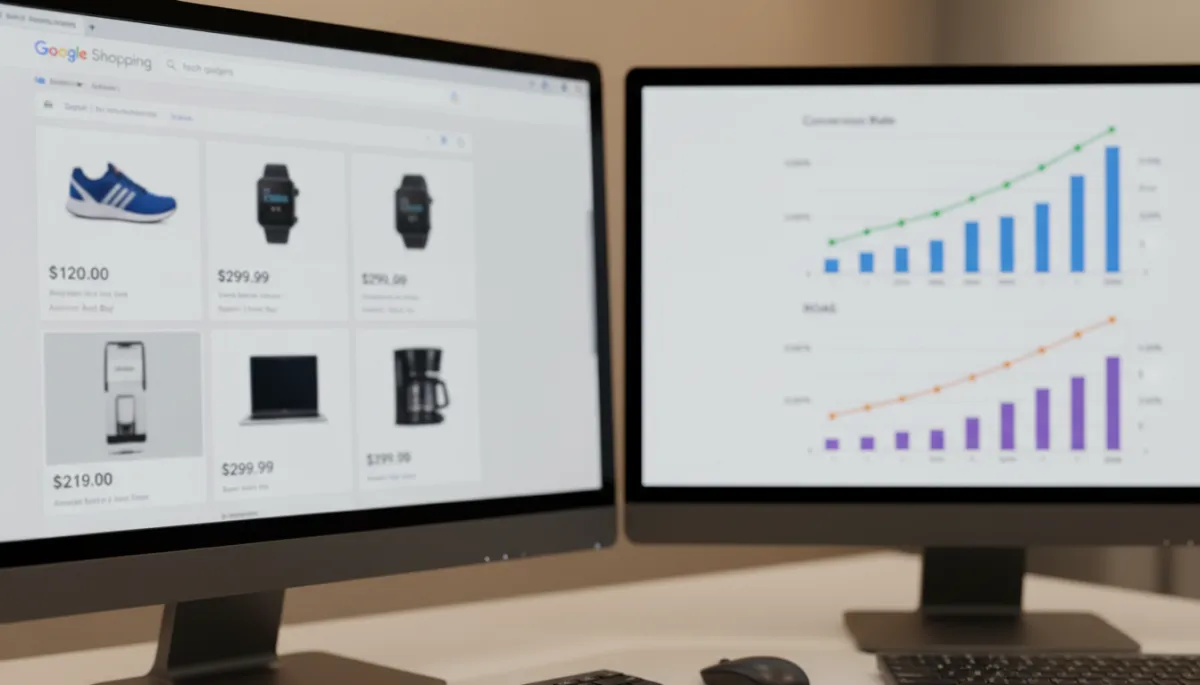
Pre-qualified clicks from Shopping Ads routinely beat text ads on conversion and ROAS.
Product Feed Optimization: Where Most Stores Quietly Bleed Revenue
Here’s the harsh truth: most eCommerce brands treat their product feed like a technical checkbox, not a revenue engine. They dump titles out of their platform, push a basic feed into Merchant Center, and hope Google figures it out. That laziness is expensive. In 2026, feed quality directly impacts auction eligibility and visibility — Google’s Feed Quality Score now drives a massive share of whether you even show up (mygoogle.fr; alibaba.com).
Product feed optimization is the process of rewriting, restructuring, and enriching your product data so Google can match your products to high-intent searches with surgical precision. It’s not cosmetic. It’s about:
- Building keyword-rich, clear product titles that match how real buyers search, not how your warehouse labels items.
- Writing focused descriptions that highlight benefits, specs, and use cases Google’s AI can understand and rank for.
- Fixing and enriching attributes — brand, GTIN, size, color, material, shipping, returns, certifications — to meet 2026 compliance standards and unlock more impressions.
- Ensuring prices, availability, and shipping stay fresh so you’re not throttled or disapproved when demand spikes.
When feeds are sloppy, Google can’t confidently match your products to the right queries. You show up for vague, low-intent searches, pay for bad clicks, and vanish when buyers are ready to purchase. That’s the “massive revenue left on the table” most brands never see — because they blame Google instead of their data. KJDM doesn’t tolerate that. We rebuild feeds so Google has zero doubt about what you sell, who should see it, and when it should show.
Inside KJDM’s Shopping Ads Service: From Setup to Aggressive Scaling
KJDM’s Shopping Ads service is built for eCommerce owners who care about profit, not vanity screenshots. Plans range from $297/mo (Plan 1) to $558/mo (Plan 3), and every plan is structured around one non-negotiable: return on ad spend. Here’s what you actually get — not fluff, not vague “strategy sessions,” but concrete execution that moves revenue.
1. Google Shopping Campaign Setup Done Properly
We don’t just flip on a Performance Max toggle and pray. We structure your Shopping campaigns and asset groups by product category, margin, and intent. That means:
- Clean account architecture that separates high-margin from low-margin products so bid strategies don’t blur your profits.
- Negative keyword frameworks to block irrelevant searches that drain budget.
- Tight connection between Merchant Center and Google Ads so diagnostics are monitored and fixed fast.
2. Product Feed Optimization in Google Merchant Center
We get inside Merchant Center and treat your feed like a high-value asset. Titles are rewritten, attributes are fixed, missing data is added, and policy issues are cleared. With Google’s newer Feed Quality Score and stricter attribute rules in 2026, this is not optional anymore (mygoogle.fr; alibaba.com). If your feed is weak, your ads are throttled. We don’t allow that.
3. Smart Shopping Bid Strategy Built Around Profit
Bidding is where most eCommerce owners burn cash. They either bid too low and choke volume, or too high and blow out ROAS. KJDM builds a tiered bid strategy based on:
- Product margins and lifetime value, not just revenue per order.
- Search intent tiers — branded, high-intent, category, and generic queries are not treated the same.
- Real performance data over time, feeding Google’s AI with clean, accurate conversion values so automated strategies have the right targets (pbjmarketing.com; ppc.org).
4. High-Impact Product Listing Ad Creation
Your images and product data either stop the scroll or get ignored. We help you create and test clean, compelling product images and listing variations that stand out in the Shopping carousel. That includes:
- Ensuring images meet Google’s latest visual standards and policies, avoiding silent performance penalties.
- Testing lifestyle vs. studio-style imagery where allowed to improve CTR without sacrificing ROAS.

Strong feed optimization and clean creative turn Shopping from a cost center into a profit engine.
5. Competitive Pricing Analysis That Keeps You in the Game
Google Shopping is brutally transparent. Your product sits right next to your competitors’ products, with prices exposed. If your pricing is out of line, no amount of “brand story” will save you. KJDM runs competitive pricing analysis to identify:
- Where you can push price and still win because of brand, reviews, or unique value.
- Where you’re overpriced and losing impressions and clicks to cheaper options.
- Which products deserve more aggressive bids because your price and margin give you an unfair advantage.
6. Monthly Performance Reporting With Relentless ROAS Tracking
We don’t send fluffy dashboards full of impressions and clicks and call it a win. Every month, you get clear, direct reporting focused on:
- ROAS by campaign, product group, and key product lines.
- Revenue, cost, and profit impact — not just “conversions” with no context.
- Concrete actions we took last month and what we’re changing next month to push ROAS higher.
Why KJDM Obsesses Over ROAS, Not Vanity Metrics
In 2026, platforms are pushing more automation and less transparency. It’s easy to get dazzled by rising impressions or slick AI features while your profit quietly shrinks (pbjmarketing.com; clickguard.com). KJDM refuses to play that game. ROAS is the scoreboard. Everything else is context, not success. If your ad spend isn’t returning enough revenue — and enough profit — the strategy changes. Immediately.
That means we:
- Kill campaigns and products that consistently drag down ROAS, even if they “look good” on surface metrics.
- Shift budget into the product groups and search intents that prove they can scale profitably.
- Use your actual margins and customer value to set ROAS targets that make business sense, not just platform defaults.
What ROAS Can You Realistically Expect in the First 90 Days?
Let’s cut the hype. You’re not going from zero to 10x ROAS overnight on cold Shopping traffic. Any agency promising that is selling fantasy. But with clean tracking, a solid feed, and disciplined bidding, realistic ROAS targets in the first 90 days look like this for most eCommerce brands:
- Weeks 1–4: Data-building and stabilization. Expect ROAS in the 1.5x–2.5x range as we clean the feed, block junk traffic, and teach Google which products and queries actually convert.
- Weeks 5–8: Aggressive optimization. With enough conversion data and cleaner signals, we typically push into the 2.5x–3.5x ROAS range, trimming dead weight and reinforcing winning segments.
- Weeks 9–12: Scaling what works. For well-positioned brands (decent pricing, strong product-market fit, and healthy margins), 3x–5x+ ROAS is achievable on core campaigns, with some top performers outrunning that in specific product lines.
Your exact numbers will depend on your niche, competition, pricing, and site experience — but the pattern is consistent: stabilize, optimize, then scale. KJDM’s job is to make sure every step of that curve is as steep and profitable as possible, instead of letting Google wander blindly on your dime.
Ready to Stop Guessing and Start Printing Profitable Sales?
Google Shopping Ads are not optional anymore. They’re the front shelf of the modern search experience — tightly integrated into AI-driven results, Shopping grids, and Universal Cart experiences across Google’s ecosystem (blog.google; ppc.land). If you’re not there with a sharp feed, disciplined bidding, and ruthless ROAS focus, your competitors will happily take your customers while you argue with your analytics.
KJDM’s Shopping Ads management — starting at $297/mo and scaling up to $558/mo — is built for eCommerce owners who are done wasting money on soft metrics and “brand awareness” excuses. If you want clear strategy, hard numbers, and aggressive optimization around ROAS, it’s time to stop guessing and bring in a team that lives inside this ecosystem every day.
If you’re serious about turning Google Shopping into a predictable, profitable sales channel — not just another line item in your ad budget — take the next step now. Visit kljj365.com, request your Shopping Ads review, and let’s see exactly how much revenue your current setup is leaving on the table.