Real-Time Brand Control with KJDM's BrandScope
Brand Monitoring, Reputation Management, Competitive Intelligence
Stop Flying Blind: KJDM’s BrandScope Tool Gives You Real‑Time Control of Your Brand
As a senior software engineer, I’ll be blunt: if you’re not monitoring your brand online with AI, you’re choosing to discover problems only after they’ve already cost you money. KJDM’s BrandScope Tool exists to end that guesswork, for $126/month.

If You’re Not Monitoring, You’re Volunteering for Reputation Damage
Let’s start with the uncomfortable truth: businesses that don’t monitor their brand online are constantly reacting, never preventing. You only hear about a problem when:
- A customer tags you in a rage tweet or TikTok.
- A sales deal stalls because “we saw some bad reviews.”
- A competitor quietly hijacks your narrative while you’re busy guessing at “brand perception.”
By the time this stuff reaches your inbox, the damage is already compounding. In 2026, brand conversations move faster than your manual monitoring ever will. AI-generated content and social chatter are exploding; some studies show AI mentions growing over three times faster than traditional social mentions. If you’re not plugged into that stream, you’re operating blind in the channels that shape trust.
What BrandScope Actually Does for $126/Month
BrandScope is KJDM’s AI-powered brand monitoring tool built for exactly this mess. For $126/month, you’re getting a focused, practical stack of capabilities instead of a bloated “enterprise” platform you’ll never fully use:
- Real-time brand mention tracking across the web and social media — news, blogs, reviews, X, TikTok, forums, and more.
- AI sentiment analysis that flags positive, neutral, and negative mentions automatically, so you don’t have to read every word yourself.
- Competitor brand monitoring so you see what your competitors’ customers are saying in public, in their own words.
- A clean social listening dashboard with trends, volume, and sentiment over time instead of ten separate tabs and guesswork.
- Alert notifications for new mentions and sentiment spikes so you can respond before a post snowballs into a crisis.
- Monthly sentiment reports that show how your reputation is trending, not just what happened yesterday.
- A quarterly brand health report that pulls it all together into a C‑suite-ready view of risk, momentum, and opportunity.
This is not “nice-to-have analytics.” This is an early-warning system for your reputation and a constant feed of competitive intelligence and content ideas.
How AI-Powered Monitoring Catches Problems Before They Go Viral
As engineers, we design systems to detect anomalies before they become outages. BrandScope applies the same principle to reputation. Its AI layer doesn’t just log mentions; it interprets them in real time and raises flags when patterns look dangerous.
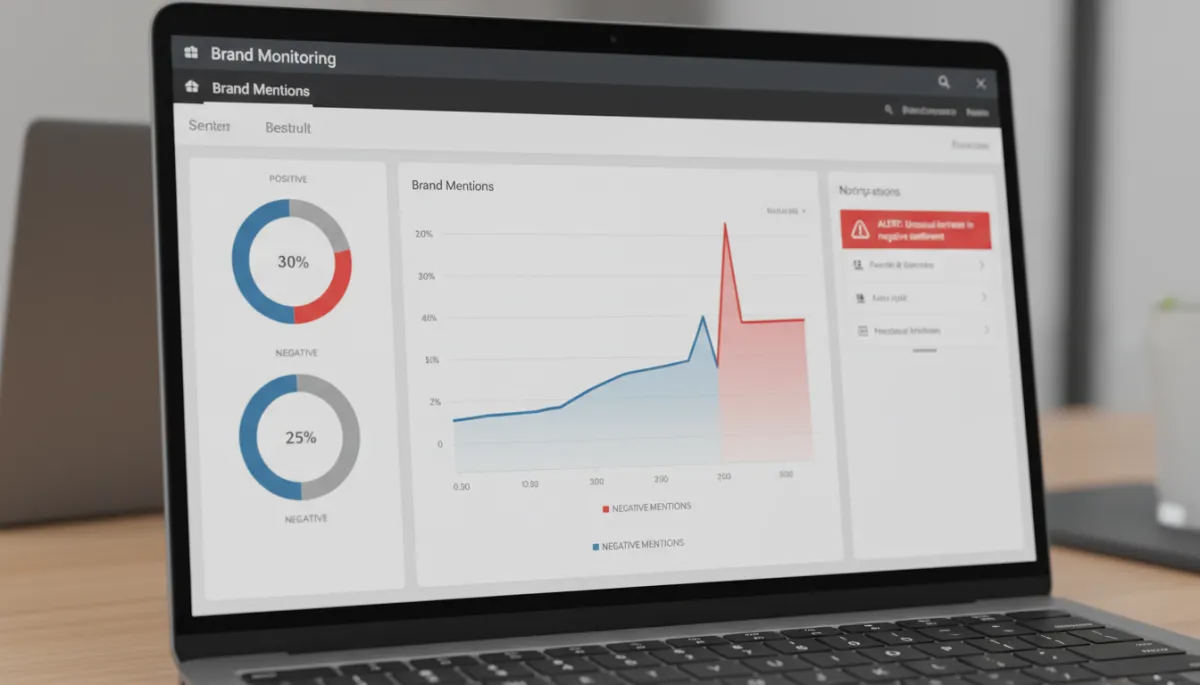
Early alerts on negative spikes let you respond before issues snowball into crises.
Here’s what that looks like under the hood conceptually. Imagine a simple stream processor that ingests mentions, runs sentiment, and triggers alerts when negativity crosses a threshold. In pseudo‑Python, that flow looks like this:
def process_mention(mention):
    text = mention["text"]
    sentiment = ai_sentiment(text)  # returns "positive", "neutral", or "negative"
    save_to_dashboard(mention, sentiment)

    if sentiment == "negative":
        score = risk_score(mention)
        if score >= 0.7:
            send_alert(
                subject="High-risk negative mention detected",
                body=f"{mention['source']} - {mention['url']}"
            )
BrandScope is obviously more sophisticated than this snippet, but the logic is the same: real-time ingestion, AI-driven sentiment, risk scoring, and instant alerts. You’re not waiting for your intern to stumble across a bad review on Monday; you’re getting a notification within minutes and responding while the audience is still small and reachable.
Competitor Monitoring: Free Market Research You’re Currently Ignoring
Most brands obsess over their own reviews and mentions while completely ignoring the goldmine sitting in their competitors’ feedback. That’s a mistake. Monitoring what your competitors’ customers are saying publicly is pure, unfiltered market research — and you don’t have to pay a single respondent incentive to get it.
BrandScope tracks competitor mentions the same way it tracks yours. That means you can see:
- The features customers praise them for — and whether those are worth copying or counter-positioning against.
- The pain points that keep coming up — slow support, confusing pricing, broken onboarding, weak integrations.
- Which channels they’re dominating and where they’re weak.
You can slice this data like you would any other dataset. Export competitor mentions, group by theme, and you have a backlog of product improvements and positioning angles. For example, you could take a CSV export from BrandScope and run a quick topic analysis script:
import pandas as pd

df = pd.read_csv("competitor_mentions.csv")
negative = df[df["sentiment"] == "negative"]

top_complaints = (
    negative["auto_tagged_theme"]
    .value_counts()
    .head(5)
)

print("Top competitor complaints:")
print(top_complaints)
That’s not theory. That’s practical, engineering-grade competitive intelligence that your marketing and product teams can execute on immediately.
Social Listening: The Market Research Most Businesses Completely Miss
Social listening isn’t about vanity metrics. It’s about discovering what your ideal customers are actually struggling with — in their language, on their timelines, without a survey script steering them. BrandScope’s social listening dashboard surfaces:
- Emerging market trends — new tools, new expectations, new frustrations that aren’t in your reports yet.
- Unmet needs — repeated “I wish this tool would just…” statements you can turn into features or offers.
- Content opportunities — questions and myths you can crush with targeted blog posts, videos, and ads.
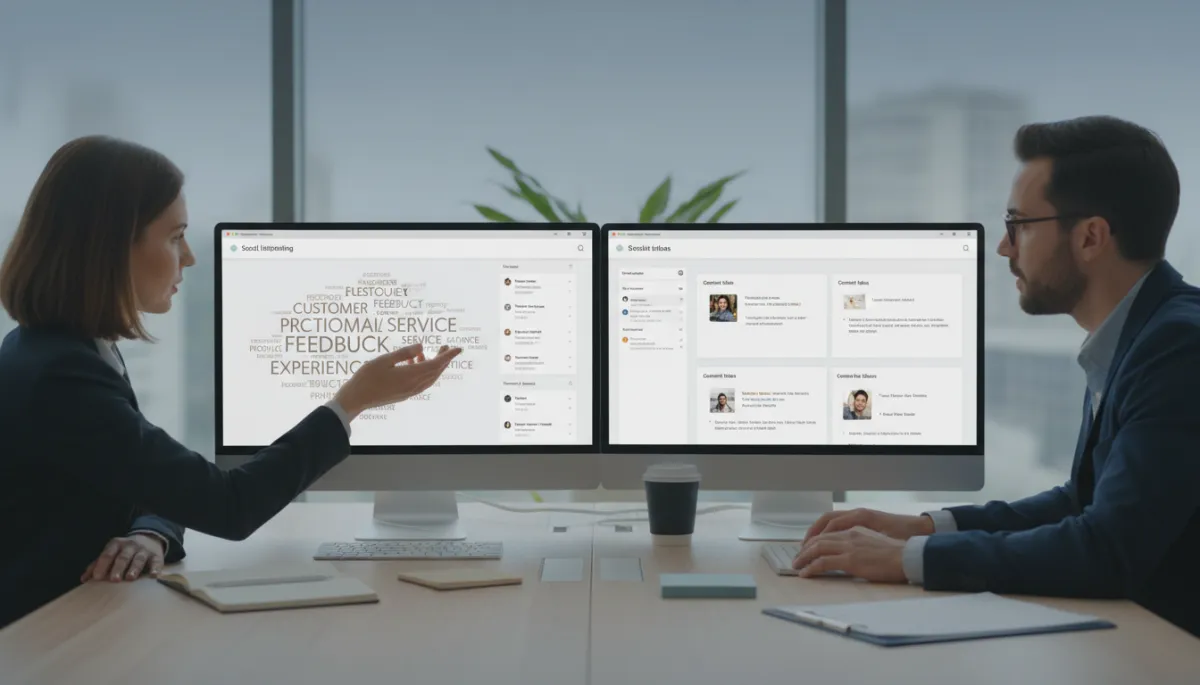
Social listening turns raw conversations into product ideas and high-converting content topics.
You can even wire BrandScope’s exports into your content planning workflow. For example, pull the top questions people ask about your category and auto-generate a prioritized content list:
questions = df[df["intent"] == "question"]
topics = (
    questions["normalized_topic"]
    .value_counts()
    .head(10)
)

for topic, count in topics.items():
    print(f"{topic} > {count} questions > create explainer + case study")
Most businesses are guessing what to publish. You don’t have to. Social listening gives you a content roadmap straight from the market’s mouth.
Monthly Sentiment & Quarterly Brand Health: From Noise to Strategy
Raw mentions are noisy. Executives don’t want a firehose; they want signal. That’s why BrandScope’s monthly sentiment reports and quarterly brand health reports matter. They compress thousands of data points into trends you can act on:
- Is your sentiment improving or deteriorating after a big campaign?
- Did that pricing change spark backlash or quiet acceptance?
- Are you gaining or losing share of voice against your top competitors?
Think of the quarterly brand health report as your uptime dashboard for reputation. You’d never run your infrastructure without monitoring CPU, latency, and error rates. Running your brand without monitoring sentiment, volume, and narrative direction is just as reckless.
Why $126/Month Is Not a Cost — It’s Insurance on Every Marketing Dollar
Let’s talk money. You’re probably already spending thousands — maybe tens of thousands — per month on ads, content, sponsorships, and sales. If you’re not monitoring your brand, you’re effectively running that entire budget without logging or observability. You’re burning cash and hoping it “feels” like it’s working.
$126/month for BrandScope is not another line item to justify. It’s the protection layer on every other line item:
- It catches negative narratives early, before they tank your conversion rates and ad performance.
- It shows you what’s actually landing with your audience, so you stop funding dead-end campaigns.
- It exposes competitor weaknesses you can exploit with tightly targeted offers and messaging.
In engineering terms, BrandScope is your observability stack for brand and market perception. You would never deploy production code without logs, metrics, and alerts. Don’t deploy marketing without the same discipline.
You Can Keep Guessing, or You Can Instrument Reality
Business owners and marketers who treat reputation and competitive intelligence as “soft” topics are getting outplayed by those who treat them like hard data. The tools exist. The signals are public. The only question is whether you’re willing to see them in time to matter.
KJDM’s BrandScope Tool gives you AI-powered brand monitoring, real-time alerts, competitor insight, social listening, and clear reporting for $126/month. That’s not a luxury. It’s the minimum standard for any serious brand operating in 2026.
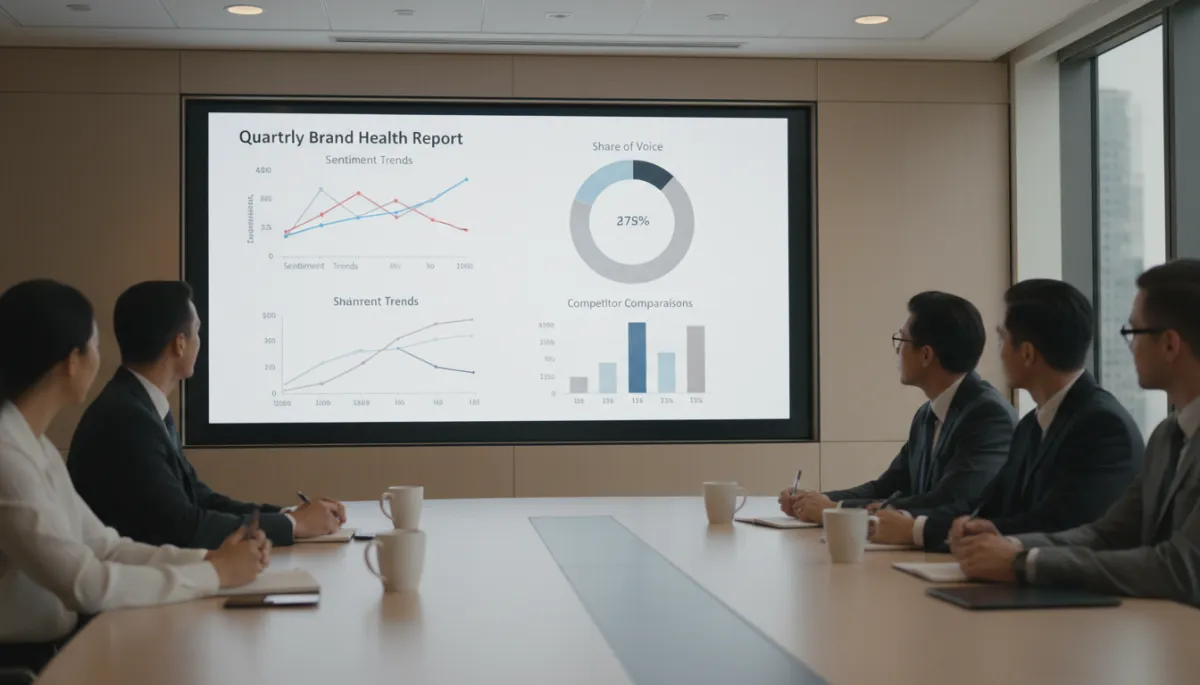
Quarterly brand health reports turn raw monitoring data into clear, executive-level decisions.
Take Control of Your Brand Before the Market Does It for You
You can keep reacting to problems once they’ve already hurt your revenue, or you can see them coming and turn them into opportunities. As an engineer, I’ll always choose instrumentation over ignorance. As a business owner or marketer, you should too.
If you’re serious about protecting your reputation, outmaneuvering competitors, and extracting every bit of value from your marketing spend, it’s time to put BrandScope in place and stop guessing.
Go to kljj365.com and get KJDM’s BrandScope Tool running before your next campaign goes live. The market is already talking about you. It’s your choice whether you hear it in real time — or after the damage is done.